
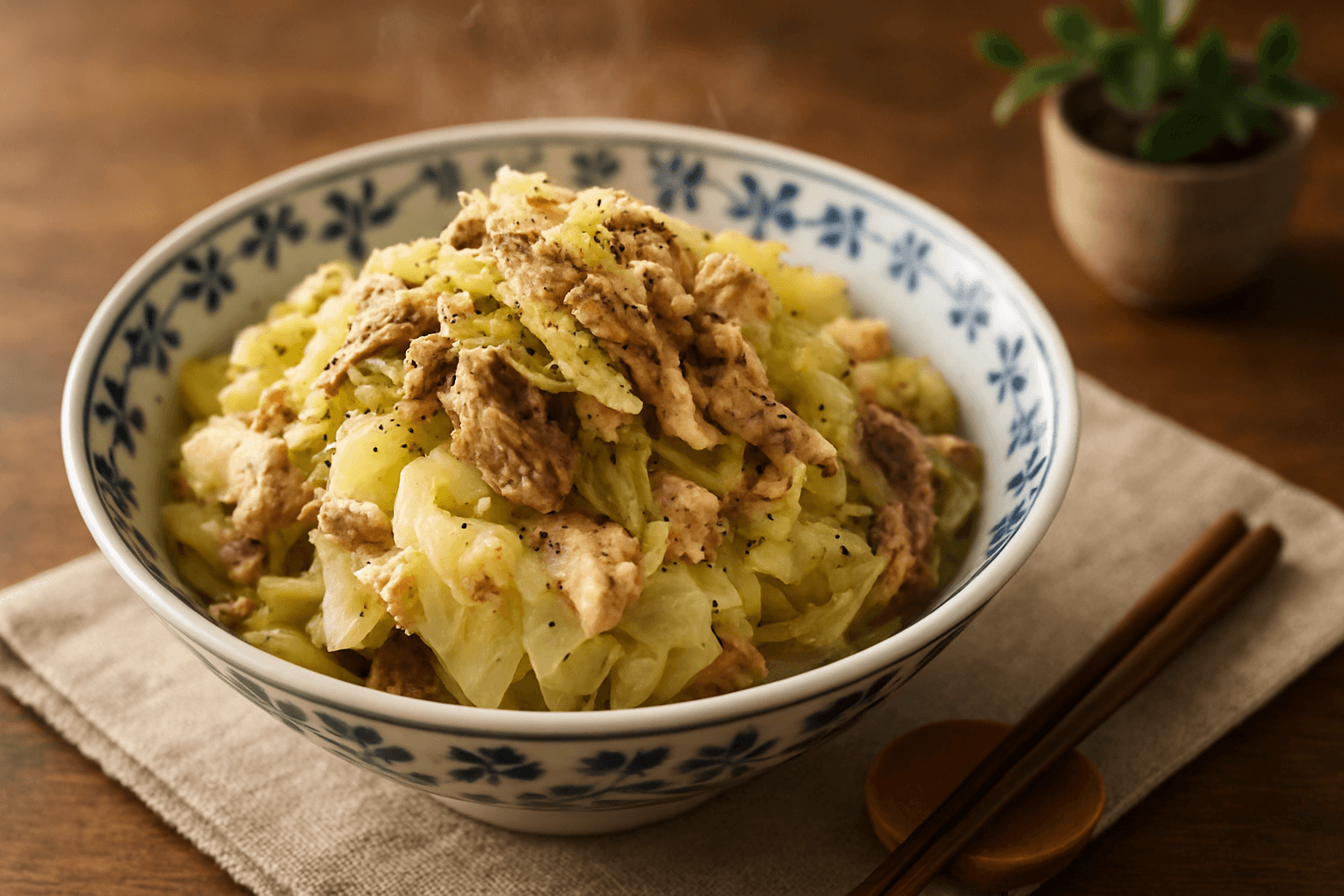

You can make this super easy dish just by steaming canned mackerel with cabbage! The yuzu kosho gives it a refreshing kick that I totally love ♪
Ingredients
2 servings- Canned mackerel in water1 can (190g)
- Cabbage1/4 head
- ★Chicken bouillon powder1 tsp or more
- ★Yuzu pepper (yuzu kosho)1 tsp or more
- ★Sesame oila drizzle
Directions
15 min- 1
Roughly chop 1/4 head of cabbage and place it in a frying pan. Add 1 can of mackerel in water with its liquid, sprinkle 1 tsp or more of chicken bouillon powder, and cover with a lid.
- 2
Steam over medium heat for about 5 minutes until the cabbage becomes tender. Add 1 tsp or more of yuzu pepper and coat everything with the moisture released from steaming.
- 3
Finally, add a drizzle of sesame oil and spread the aroma throughout the dish to finish.
Tips
The moisture comes only from the cabbage and the canned mackerel liquid. Be careful not to use high heat in the first step.
Nutrition
Per serving- Calories160 kcal
- Protein14 g
- Fat8 g
- Carbs5 g
- Sodium1.1 g
You can make this super easy dish just by steaming canned mackerel with cabbage! The yuzu kosho gives it a refreshing kick that I totally love ♪
Ingredients
2 servings- Canned mackerel in water1 can (190g)
- Cabbage1/4 head
- ★Chicken bouillon powder1 tsp or more
- ★Yuzu pepper (yuzu kosho)1 tsp or more
- ★Sesame oila drizzle
Directions
15 min- 1
Roughly chop 1/4 head of cabbage and place it in a frying pan. Add 1 can of mackerel in water with its liquid, sprinkle 1 tsp or more of chicken bouillon powder, and cover with a lid.
- 2
Steam over medium heat for about 5 minutes until the cabbage becomes tender. Add 1 tsp or more of yuzu pepper and coat everything with the moisture released from steaming.
- 3
Finally, add a drizzle of sesame oil and spread the aroma throughout the dish to finish.
Nutrition
Per serving- Calories160 kcal
- Protein14 g
- Fat8 g
- Carbs5 g
- Sodium1.1 g
Tips
The moisture comes only from the cabbage and the canned mackerel liquid. Be careful not to use high heat in the first step.